About
We are not trying to build a business on top of animal shelters.
Rescuely exists because the software a shelter needs to do its job should not be the thing competing with its food budget.
Why there is a Rescuely at all
In the fall of 2018, my mother-in-law called my wife: her dog had found a baby rabbit on her property, out in Green Township. Days before, a family member had brought a rabbit home and let her run loose on that same property, in the house and out of it — which is how there came to be a litter outside at all. We drove out to see where the dog had found her, and after looking around the yard for a while, found the rest of the litter tucked into a cinder block.
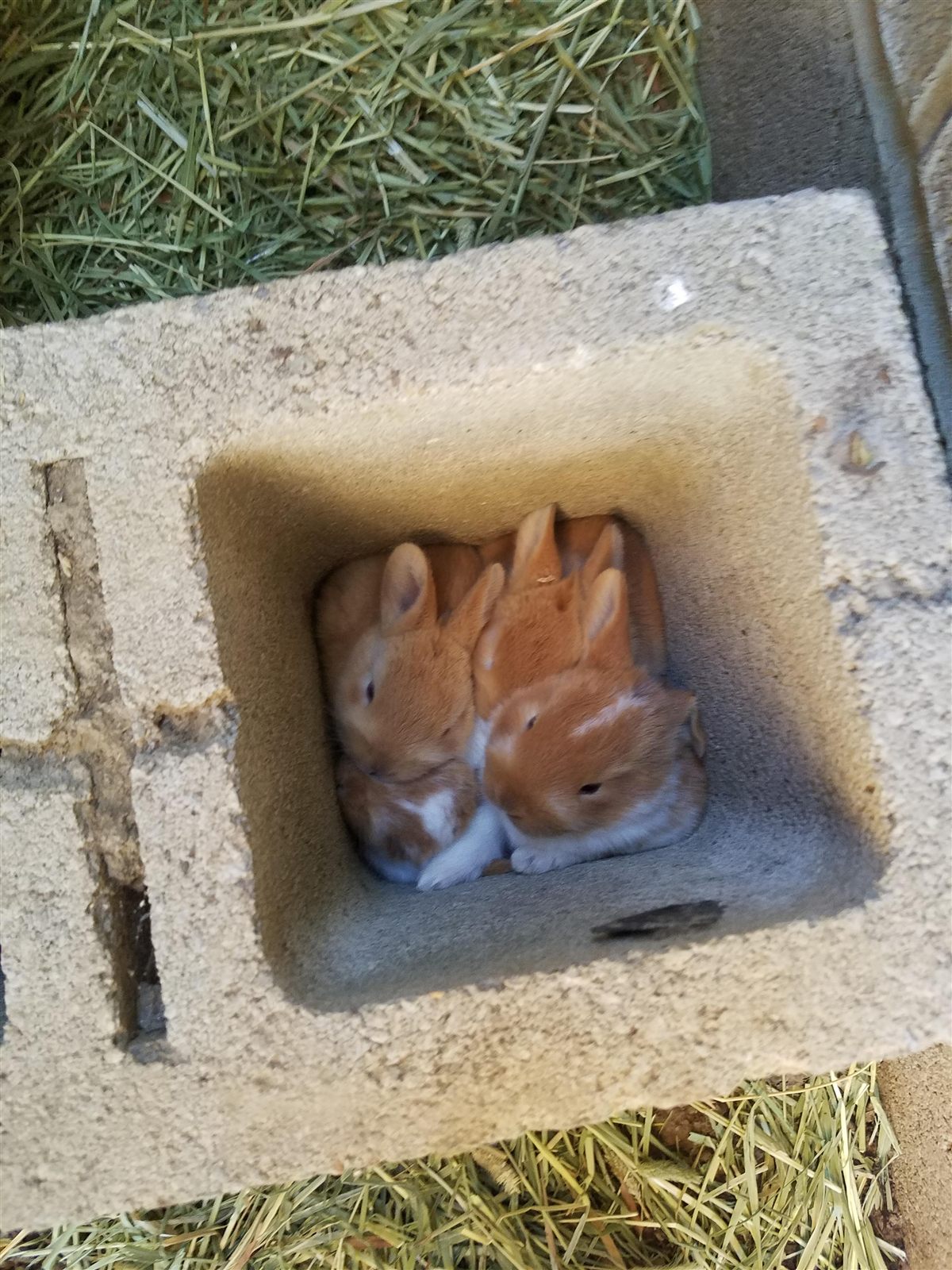
We blocked the block off so the dog could not get back in, looked the litter over, and went home thinking that was the end of it. It was not — we thought about them the rest of that evening and were back out the next day with hay, packed the whole space with it, and kept returning to check on them. On one of those visits, one of the kits walked straight out of the block toward my wife and would not stop looking her over, small enough to fit in a hand. That is how the decision actually got made — we did not pick a rabbit, a rabbit picked us.
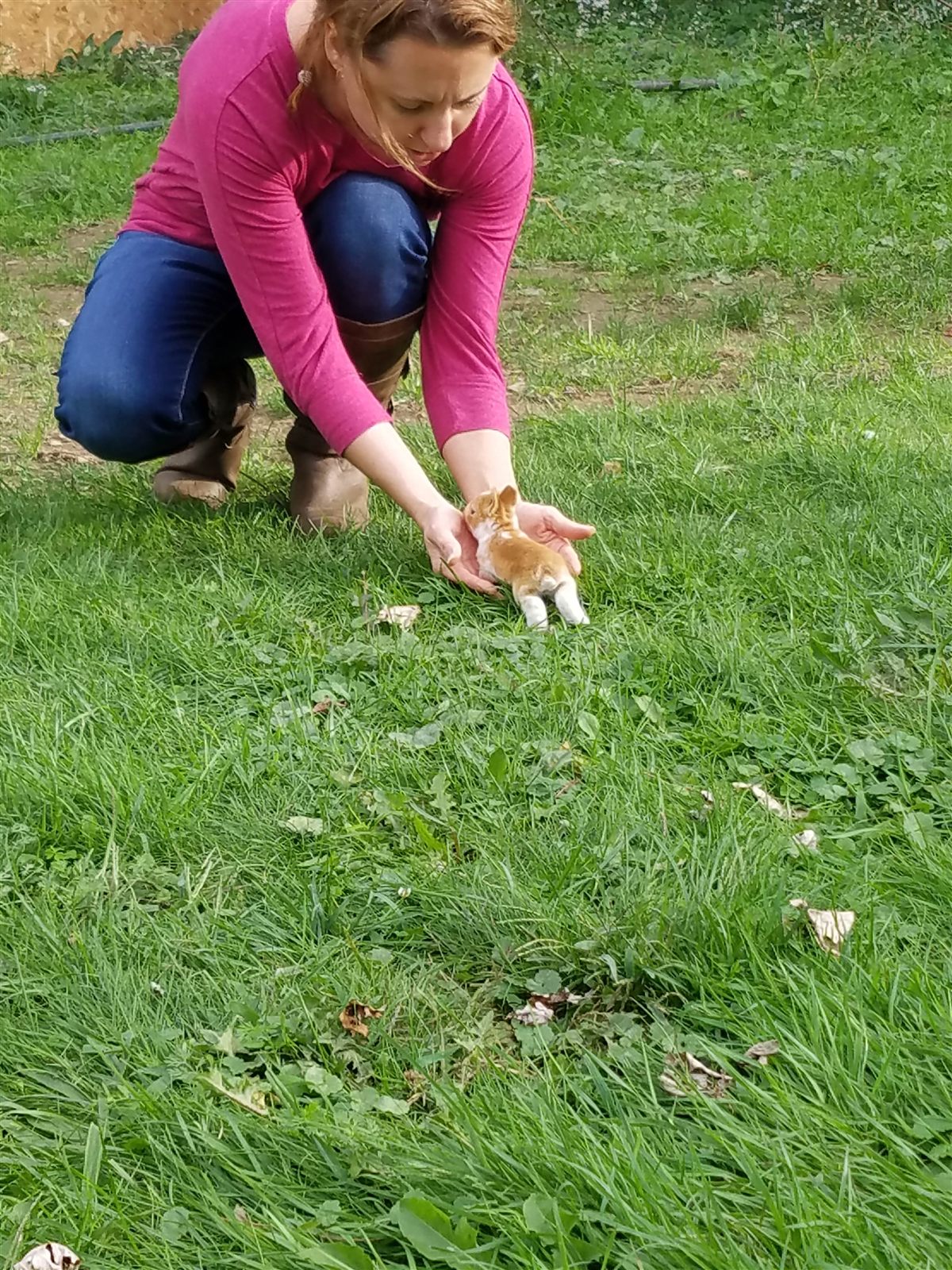
We moved the whole litter, mother included, into a pen in the garage where the dog could not reach them, and kept coming back until we saw the kits eating hay on their own. Then we brought the one who had picked us home.
Our own dog, Rylee, met her within days, and the two of them became fast friends — while we spent the weeks it took to find good homes for her mother and every one of her litter-mates.
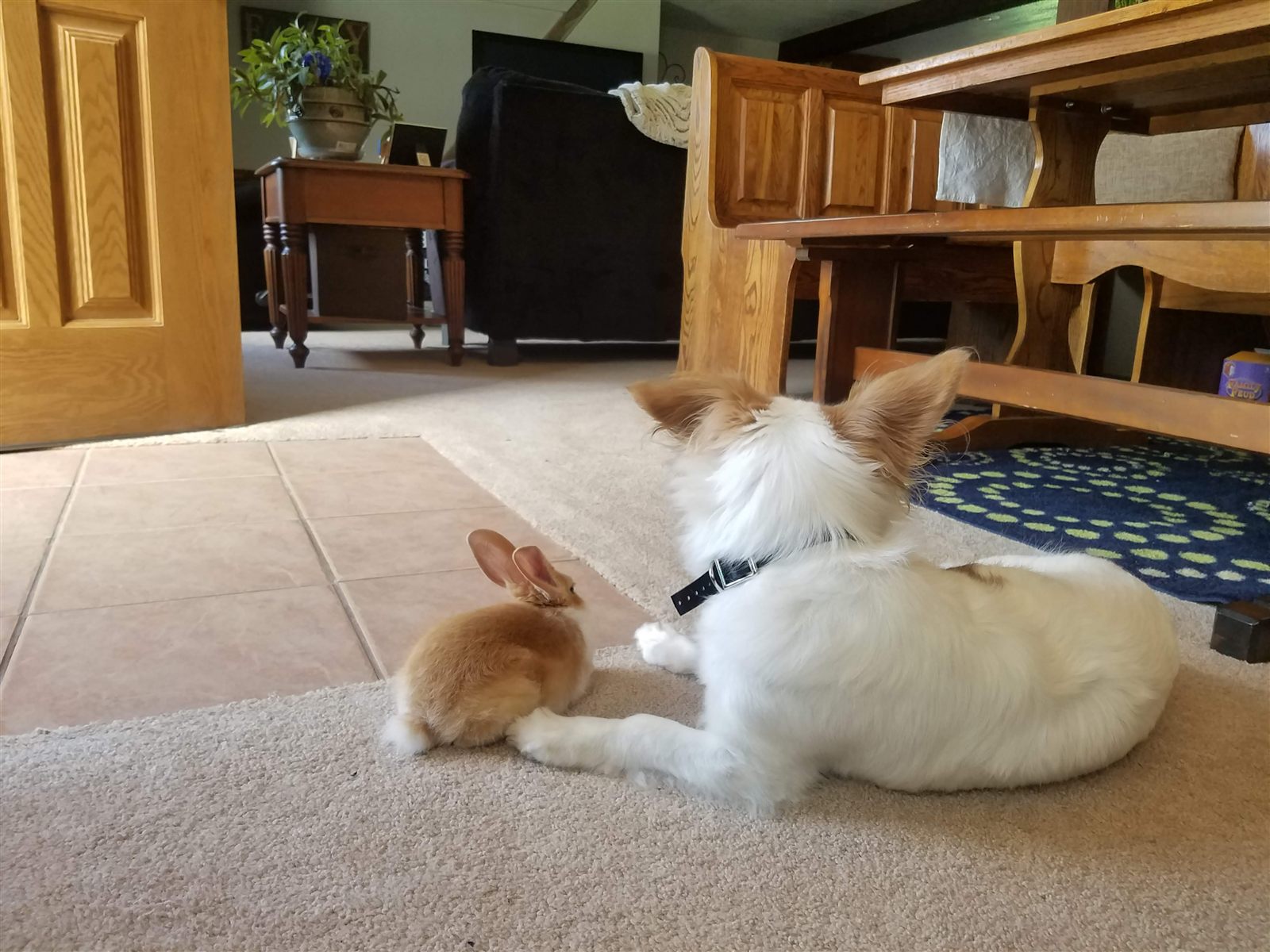
She was our first rabbit. We adopted five times since then. They each lived their lives in our homes in comfort and security, and for four of them, now only in our hearts.
We adopt. We do not shop.
Every rabbit after the first came out of a rescue. Once you have learned to read one — what a posture means, what stillness means, how completely a rabbit will hide being ill — you stop being able to walk past the ones nobody is asking about. So we keep going back. We volunteer, we donate what we can, and we will keep adopting, because there is no version of this where we look at an animal with no home and decide we are full.
Why it turned into software
Adopting, fostering, volunteering, donating — all of it is real, and all of it stops at the edge of the hours in our week. We wanted to do more than that, and more had to mean something that keeps working while we are asleep.
Software is the thing we know how to build. A rescue that spends less on it has more left for the animal in front of it, and a rescue whose records are genuinely in one place loses less — fewer missed rechecks, fewer dropped follow-ups, fewer animals whose history walks out the door with the volunteer who happened to remember it. It is the same work as catching a rabbit in a yard, done at a different distance from the leash.
Rescuely is that more.
The thing we kept running into
Look at what a shelter pays for software and you find one of two shapes. Either a fee every time an animal goes home — two to five dollars, so the shelter that saved three thousand animals last year paid the most — or a monthly bill a small rescue sets against a food order and loses.
So a lot of rescues run on a shared spreadsheet, a group chat and somebody’s memory. Not because they do not care about records, but because the records cost money they would rather spend on a dog.
What we decided instead
Everything that runs a shelter is free. Intake, care, medical, foster, adoption, follow-up, reporting, the listing feeds, your data on the way out. Not free for a year, not free under a hundred animals, not free until the useful features. There is one plan and every shelter is on it.
We charge for four add-ons, each bought on its own, and only because each has a bill behind it we cannot absorb: backups and unlimited photos at $25 a month past the three photos an animal needs to be listed, API access at $10, AI assistants at $10 plus the tokens they use, and donation processing at 1.5% on top of the payment processor’s own fees. All four are optional and none of them stands between anyone and an animal’s record.
API access is the one on that list people ask about most. It is a developer capability rather than part of the daily work of a shelter, and serving an API other people build against costs us capacity every day. Nothing a shelter needs to run sits behind it — the listing feeds, the reporting and the full data export are free and are not going anywhere.
How it is built, and why that shows
Rescuely is one API with a web app in front of it. Every screen you use calls the same public endpoints your own integration would — there is no private back channel, so the API is a real product rather than an export button.
Shelter Animals Count and the Asilomar Accords are modeled as fields on the intake and the outcome, captured the day each one happens, rather than as a report that tries to reconstruct them a year later. Every record carries the shelter’s id and every query is scoped by it, enforced by tests that fail the build rather than by remembering.
And every animal gets a QR sticker, because the person doing the work at seven in the morning is holding a leash, not a laptop.
Where it is built
Rescuely is built in Erie, Pennsylvania. It is a small operation — deliberately, because the costs that make shelter software expensive are mostly the costs of being a bigger company than this needs to be.
If you run a shelter and something here does not fit how you actually work, that is worth an email. The early shelters shape what gets built next, and that is not a courtesy — it is the only way this ends up being the right software.
What we will not do.
- Charge per adoption
- The shelter doing the most work would pay the most. That is the wrong incentive to put into this market.
- Sell your data
- Not to advertisers, not to a data broker, not as an aggregate product. It is not part of the model.
- Hold your data
- Full CSV and JSON export on demand, free, without asking anyone. The exit exists so that staying is a choice.
- Charge for the work of running a shelter
- What is free today for a shelter’s core work — animals, care, medical, foster, adoption, reporting, your data — stays free. API access is a developer and integrator capability rather than shelter work, which is why it sits among the paid add-ons. Paid add-ons cover costs we actually incur, and that is the only reason any of them exists.
- Require a sales call
- You can create an account, verify your shelter and start entering animals without speaking to anyone.
Your shelter can be running this by the end of the day.
Create your account, verify your organization, and start entering animals. No sales call, no quote, no card. The part of Rescuely that runs a shelter is free and stays free.